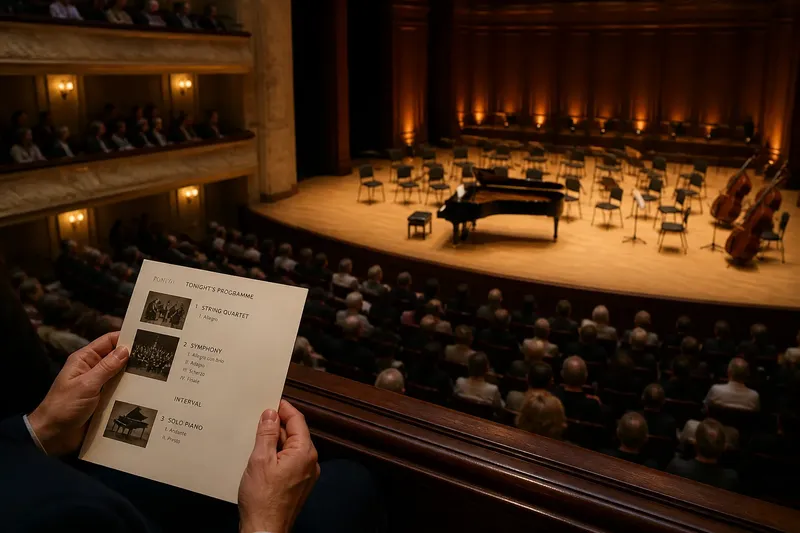
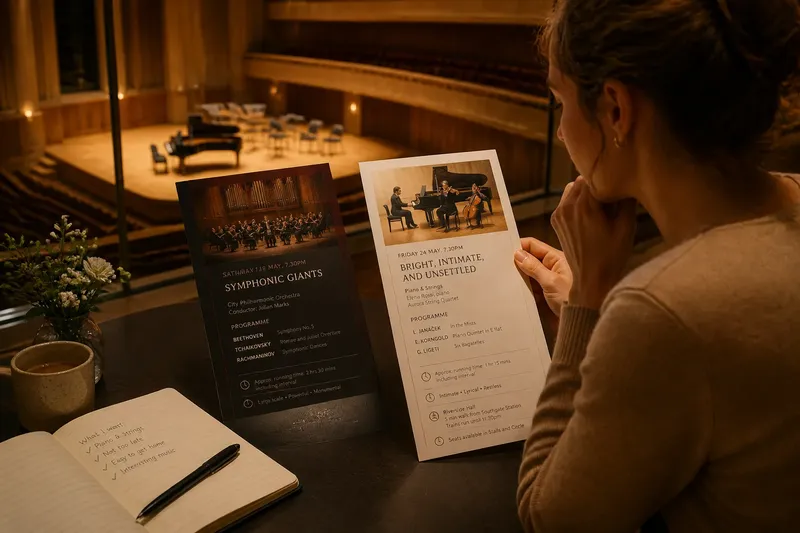
How Concert Programmes Took Shape Before the Modern Hall
Learn how early concert programmes served as event records, from identifying performers and sponsors to preserving a particular night in public musical life.
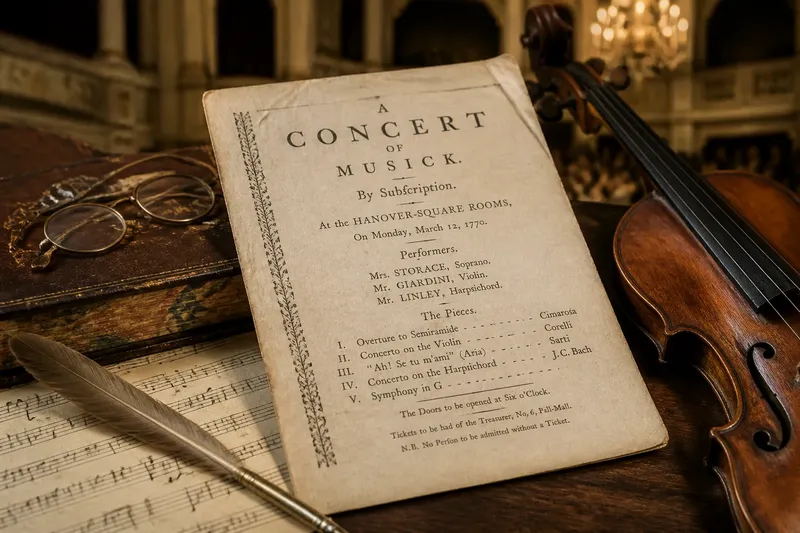
How did a printed concert programme work before the modern concert hall? In the eighteenth-century British subscription concert, a printed bill could name the performers and pieces for an evening, while surviving copies now offer clues about how organizers presented public music.
Subscription concerts provide a specific setting
Rather than treating early musical life as one uniform story, it helps to look at a recognizable format: subscription concerts. In Britain, these were organized for subscribers, with musicians and organizers arranging a series or individual event. The printed notices and programmes associated with such concerts are not all alike, and their contents depended on the event.
A programme from this setting should be read as an artifact, not as proof that every audience received the same kind of sheet. A surviving copy can identify a date, venue, performers, works, or sponsor when those details appear on the page. It cannot, by itself, tell us exactly what every listener understood or how the music felt in the room.
The printed concert programme recorded an event
The most secure historical value of a programme lies in what it actually prints. Names and titles connect a performance to particular people and works; a venue or sponsoring society, if listed, identifies an institutional setting. The page can also reveal how an organizer chose to present an evening to its intended audience.
Imagine a clearly invented example: a listener attends a subscription concert in London, and the sheet in hand names a singer, an instrumentalist, and the pieces they are scheduled to perform. The listener can use those printed details to remember who appeared and what was announced. If the sheet also lists the society behind the event, it records that connection; if it does not, the listener should not infer one.
Programme details vary from one surviving sheet to another
Some printed material associated with concerts was brief, while other sheets could include additional information. Notes, translations, dedications, and advertisements may appear in particular examples, but they should not be treated as standard features without examining the item in question.
This distinction matters to historians and curious concertgoers alike. A title and performer list document what the organizers chose to print. An explanatory note may show how a work was framed for that audience. An advertisement can point to a commercial connection, but only when it is present on the page.
What can an early concert programme tell us?
Why print a programme for a subscription concert?
A printed sheet could communicate the announced performers and works to people attending an event. Its specific purpose should be judged from its contents and context rather than assumed to be identical across concerts.
Did every early concert programme include musical notes?
No single format should be assumed for all early programmes. A particular sheet may contain only names and titles, while another may include commentary or other material.
Can a programme prove what the audience heard?
It records what was announced, not necessarily every detail of what happened in performance. Changes, omissions, or audience responses require other evidence, if such evidence survives.
What makes a programme useful as a historical source?
Its value comes from specific details that can be read and compared with other records, such as venue information, names, dates, or a sponsoring organization. Missing details remain unknown; they should not be supplied by guesswork.
A programme preserves the organizer’s public presentation
When reading a historical programme, start with the physical page and transcribe only what is legible. Separate printed facts from interpretation: a named performer is evidence that the organizer announced that person, while a claim about the audience’s reaction needs a different source.
For a hypothetical archival visit, say you find a sheet with a venue, a date, and a list of works, but no audience account. You record those visible details and note that the document does not describe listeners’ responses. The result is a modest but defensible account of how the event was presented, without turning an announcement into a report of everything that occurred.
The phrase “printed concert programme history” is most useful when it points to evidence on actual sheets, not a single sweeping account of how all concerts developed. A page can preserve the names and choices an organizer put before an audience; its silences are part of the record, too.