The Familiar Composer Trap: How to Choose a Concert Beyond Names You Know
Choose a concert beyond familiar composers by comparing program descriptions, the evening’s schedule, and the performers so you can book with confidence.
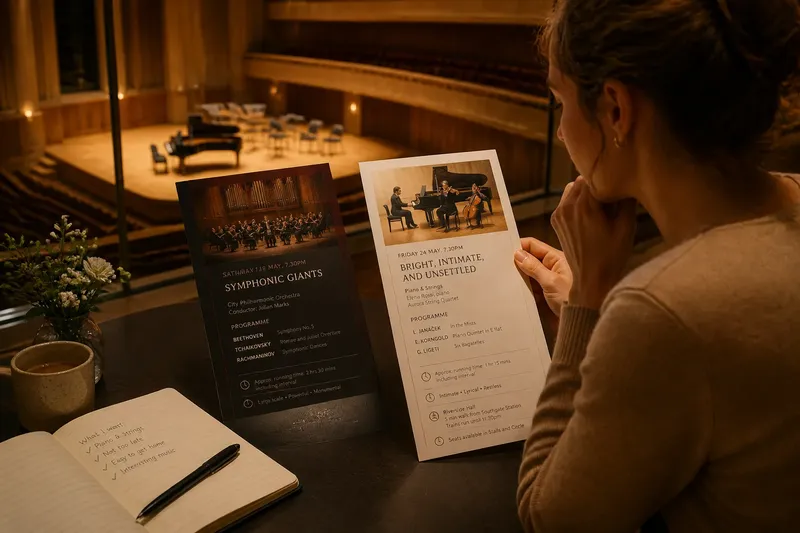
Should you choose the concert with the composer you already know, or take a chance on a name you can barely pronounce? When choosing a concert, familiar names can feel like a safe promise, but the program description and schedule often tell you more about the evening you are considering.
Read the program description for the shape of the evening
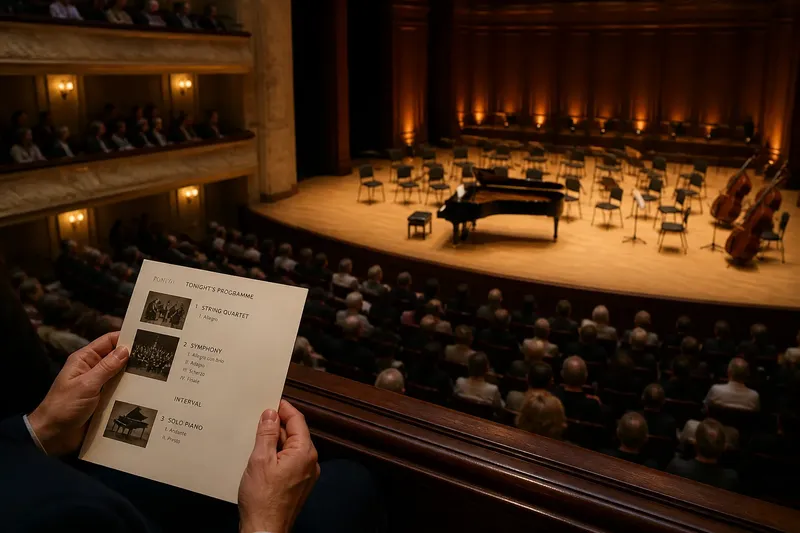
A composer’s name is useful, but it is only one part of a listing. Look at the works, performers, and instruments involved: a string quartet, solo piano, large orchestra, or voices with instruments can suggest very different kinds of events.
Words such as “restless,” “lyrical,” or “spare” are invitations rather than instructions. Ask which description makes you curious. You might want to hear a quiet opening build into a forceful finish, or simply be interested in a particular instrument.
Check the order of the works to understand how the concert is arranged. An unfamiliar composer may appear in a short opening work, while a soloist or larger ensemble features later. You do not need to decode the program like a specialist; look for a detail that makes the event feel worth your time.
Compare the practical details before booking
Give yourself a little space to compare listings instead of repeatedly scrolling through composer biographies. Save the concert pages or write down the details that affect your decision, then consider each one against the kind of evening you want.
- Program contents: Check the listed works and performers. If one work or ensemble catches your interest, keep the concert in contention; if none does, compare another listing.
- Descriptions: Notice the words used for mood, sound, or scale. If a description makes you curious, use it as a reason to consider the event; if it leaves you cold, look at the other works before deciding.
- Running time: Check whether the listing gives a total duration and says if an interval is included. If the schedule fits your evening, proceed to compare the music; if not, look for a shorter program or a more convenient date.
- Travel and timing: Check the venue’s location and how you expect to get home. If the journey and finish time suit your plans, keep the option; if they make the outing stressful, choose a more workable venue or date.
- Audio sample: Check whether the listing includes a short recording. If hearing it helps you decide, treat it as one clue; if it does not, rely on the written program and practical details instead.
- Ticket information: Check the available seating and any conditions shown by the venue. If the options suit your needs, you can continue toward booking; if they do not, compare another performance or contact the venue for clarification.
Imagine you are choosing between two listings, and the details here are invented for illustration. The first features a composer you recognize, but its description and schedule do not appeal to you. The second offers a compact work for piano and strings described as “bright, intimate, and unsettled,” and the listing gives a running time that fits your plans. You decide that you want to hear how piano and strings answer each other, check the venue’s travel details, and find they also work for your evening. The second concert becomes your choice: it offers a specific musical draw and a workable outing, while the familiar name alone does not outweigh the first listing’s less appealing fit.
Judge the length against the night you want
Length is a practical consideration, not a verdict on quality. A substantial program may suit you if you want to settle into a full evening; a shorter one may be a better fit if you have an early start or want a less demanding outing.
Look for the total duration and whether an interval is included. If the schedule is approximate, use it as a planning aid rather than an exact departure time. Include the journey to the venue, finding your seat, and getting home when you decide whether the night fits.
Notice how the program is arranged, too. Several shorter works may offer contrasting sounds, while one extended piece gives the evening a different shape. Neither format is automatically easier or more rewarding. Choose based on what you want to hear and how much time you want to spend out.
Let the music and performers guide your choice
When you compare unfamiliar programs, focus on the event’s concrete features rather than trying to prepare for every piece. A named soloist, a chamber ensemble, a chorus, or an unusual combination of instruments may give you a clearer sense of what appeals to you than a composer biography.
If the listing includes audio, a short sample can help you decide whether the sound interests you. Treat it as a clue, not a full preview: the hall, performers, and surrounding works shape the live event. If listening does not help you choose, there is no need to make it part of your decision.
For example, a listing that names a piano trio may appeal because you enjoy hearing a small group work together, even if you do not recognize the composers. Another concert might suit you better because it features a singer or a large orchestra. These are practical preferences, not tests of musical knowledge.
Which concert details answer your questions?
Do I need to know the composer before I book?
No. The works, performers, and descriptions can give you enough information to choose. Familiarity may be one reason to attend, but it is not a requirement.
How should I compare programs with different lengths?
Start with the amount of time you want to spend out and whether the listed schedule fits your plans. Then compare the works and performers; a shorter concert is not automatically the better choice if the longer one appeals more.
What if I recognize only one piece on the program?
Decide whether that piece gives you a strong reason to go, then read the descriptions of the others. A program can combine one familiar work with new music without making the evening an all-or-nothing choice.
Should I listen to recordings before the concert?
Only if doing so helps you decide or adds to your anticipation. A short sample can introduce a sound, but you can also make your choice from the listing and hear the music live without preparation.
Choose the concert that fits your evening
Before you book, name what you want from the outing: a familiar melody, a smaller ensemble, a convenient schedule, or a particular performer. Compare those preferences with the program and practical details rather than assuming the best choice is the one with the most recognizable name.
When choosing a concert, treat familiarity as one clue among several. If an unfamiliar listing keeps drawing your attention and its schedule works for you, that is a solid reason to consider it; if the music or logistics do not fit, another performance may be the better match.