Why Concert Programmes Put Pieces in a Particular Order
Why concert programmes put pieces in a particular order can help you understand the evening’s shape, from opening mood and contrast to pauses and practical stage changes.
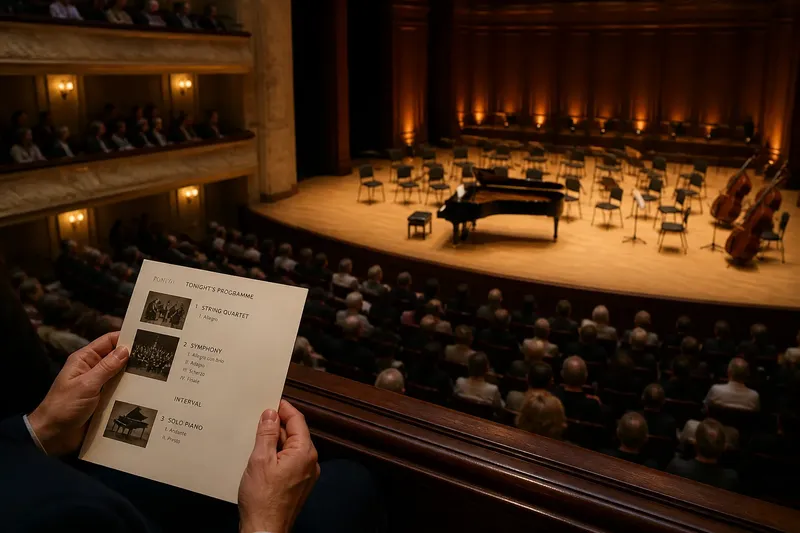
Why concert programmes put pieces in a particular order is easier to understand when you look at what each work asks of the performers and the room. A concert may move from a compact opening to a larger central work, then close with music that leaves space for a quieter response.
The order is not always a puzzle with one hidden answer. Practical needs, musical contrasts, and the shape of the evening can all matter. A printed programme offers a useful map, while the performance gives each transition its own character.
An opening piece sets the room’s first mood
The first work brings the audience and performers into the evening together. A brief, lively piece can establish momentum; a spacious opening may give the room time to settle. Neither approach dictates what follows. The choice depends on the music, the performers, and the larger programme.
Consider the difference between an opening led by bright brass and one that begins with a single exposed violin. The first may make the hall feel immediately full; the second can draw attention toward a more intimate sound. Those are different starting points, not promises about the rest of the concert.
Contrasting works can clarify the program’s shape
Placing unlike pieces together can make their differences easier to notice. A chamber group after a full orchestra changes the scale of the sound. A steady, measured work after a restless one can make the shift in motion especially clear.
Sometimes the works share a quality instead. Two pieces might both feel restrained, while one uses a small ensemble and the other a broader sound. Hearing them close together can make a difference in texture or atmosphere stand out without requiring a technical vocabulary.
These contrasts can give the evening a sense of shape, but they do not need to form a story. A sequence can be satisfying because one work opens up a different kind of attention after another.
Stage changes and pauses affect the evening’s pace
A transition includes more than the music between a final note and a new opening. Applause, a conductor’s entrance, musicians moving chairs, or a piano being brought onstage can all shape the pause. Some changes reflect the practical setup for the next work rather than an expressive choice.
Notice what the stage needs: a different group of players, a new arrangement of chairs, or instruments prepared before the first note. These details can explain why one transition takes longer than another. They also help distinguish a planned interval from a brief reset.
If there is an intermission, the programme’s two halves may have different casts or musical characters. The pause gives performers time to prepare and gives listeners a natural chance to step away, check the printed order, or let the first half settle.
The printed order meets the live room
A programme lists what is planned, but the hall adds its own character. Applause may linger, a quiet ending may hold the audience still, or a stage reset may make the next work feel like a fresh start. The printed sequence is a guide to what comes next, not an instruction for how each transition must feel.
Say you arrive at a concert whose printed order lists a brisk chamber work, a large orchestral piece, and a quiet solo work. The starting information is those three titles and their order; no notes explain a shared theme. You hear the small ensemble first, then the broader orchestral sound, and finally one performer alone. The observable result is a clear change in scale across the evening. You can reasonably describe the sequence as moving from intimate to expansive and back to intimate, while leaving open whether the organizers intended a deeper connection.
How should you read the order and its transitions?
Should I read the programme before the concert?
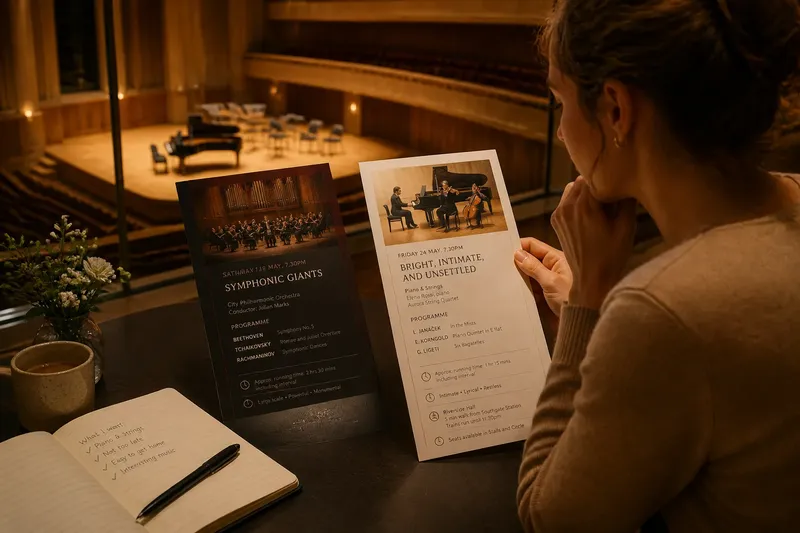
A quick look can show you the order, the performers, and where an interval falls. If the notes make you feel obliged to listen for a particular idea, set them aside and use the page simply to follow what is next.
Why does a concert begin with a short piece?
A compact opening can welcome the audience and performers without beginning at the largest scale of the evening. It may also make the next work’s different length or sound easier to notice.
Does the final piece always provide a big ending?
No. A concert can close with music that is quiet, reflective, or open in feeling. The last work might gather energy, let it recede, or leave a silence that seems to belong to the ending.
What if the transitions do not seem connected?
The works may have been chosen for practical or musical reasons that do not create a continuous story. You can still describe what is evident, such as a change in ensemble, pace, or volume, without deciding that the sequence carries a hidden message.
Use the programme as a map, not a code
When you look at why concert programmes put pieces in a particular order, the most useful clues are often straightforward: a shift in ensemble size, a pause for a stage reset, or a change in musical character. These details can tell you how the evening is arranged without requiring you to assign a single meaning to every choice.
If a transition leaves you curious, check the programme for the next work’s title and performers. You may recognize a practical reason for the change, or you may simply find that the new sound feels different. Either response is enough; the order can shape the concert even when its reasons remain partly private.