One Question to Carry into a First Concert
A first-concert listening plan helps you hear a performance on your own terms, with one small question to carry into the room and no need to know the score.
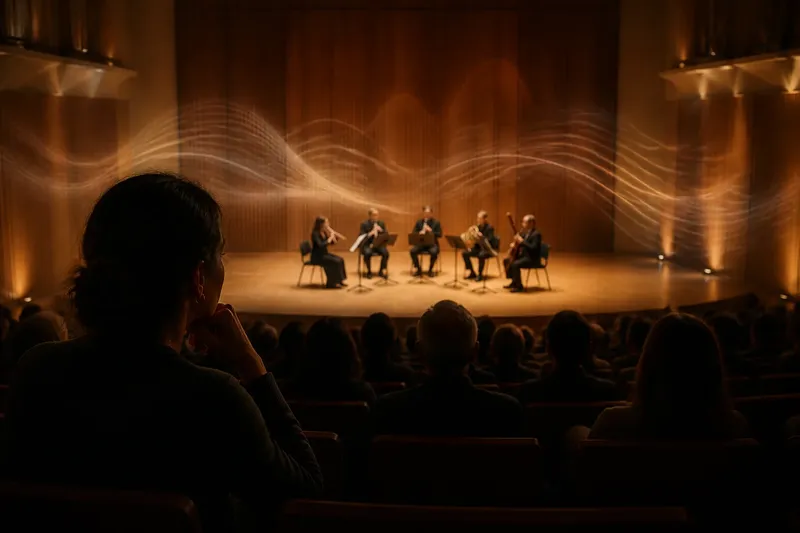
What should you do when a concert begins and you are not sure where to place your attention? A first-concert listening plan can start with a question about the room itself: how does the music make the space feel different as it unfolds?
That question shifts attention away from identifying instruments or following a tune correctly. You might notice a quiet sound that seems close, a sudden burst that fills the hall, or a pause that makes the room feel unusually still. You do not have to explain why it happens. Simply notice what the sound does to your sense of the space.
Listen to the room as well as the music
A concert is not only a collection of notes. Sound reaches you from a stage, reflects around the venue, and changes as players enter, withdraw, or play more softly. The room may seem intimate during a solo passage and expansive when the whole ensemble joins.
Try asking, “Does this moment feel near or far?” or “When does the room seem to open up?” These are ordinary questions, not technical judgments about acoustics. They give you something concrete to notice even if you cannot name the instruments or recognize the piece.
For instance, at a piano recital, a single quiet phrase might seem to occupy only the area around the instrument. When the pianist plays a fuller passage, you may feel the sound spread across the hall. That change in perceived space is a complete observation.
Use the venue to choose what to notice
The shape and atmosphere of a venue can offer a useful starting point. In a small chamber room, listen for how clearly one player’s sound stands apart before blending with the others. In a large hall, notice how a passage changes the room’s overall energy rather than trying to separate every instrument.
Your seat also affects what stands out. From near the stage, individual attacks and breaths may feel prominent; from farther back, the combined sound may be easier to take in. There is no need to treat either perspective as the right one. Use what you can hear comfortably from where you are.
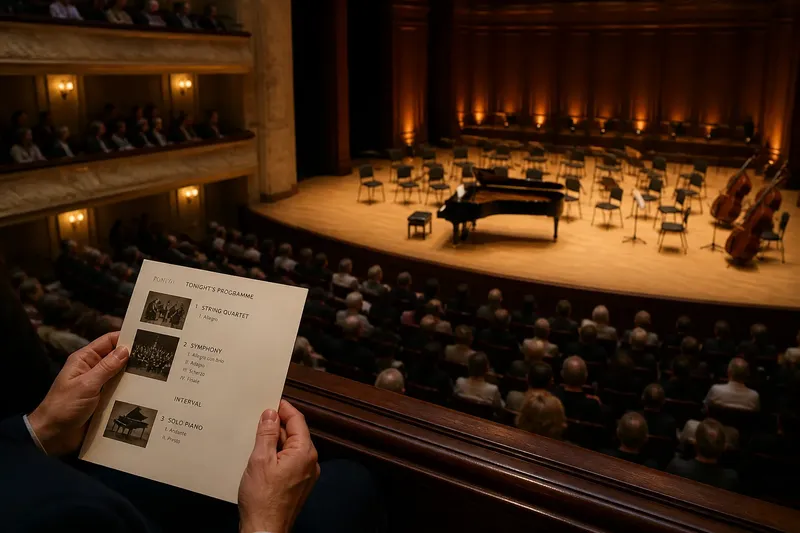
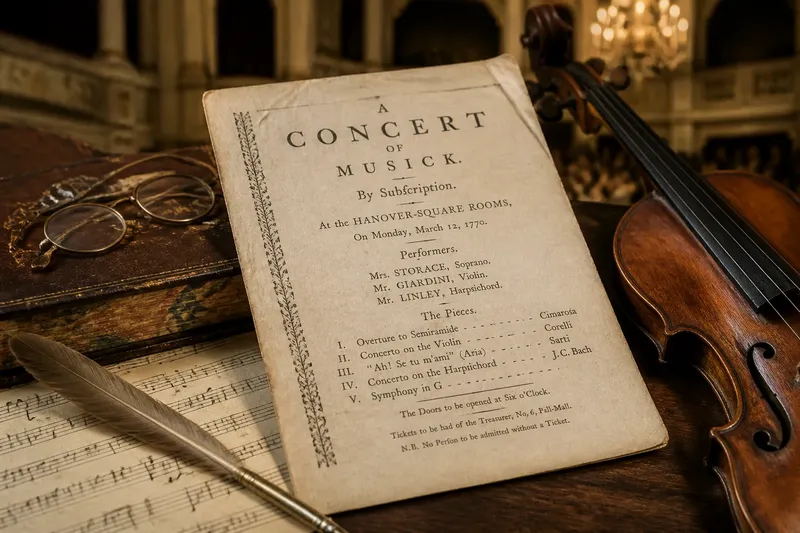
If the printed programme lists the performers and instruments, a quick glance can help you understand who is onstage. But you can leave it closed and attend to the broader shifts in sound, distance, and atmosphere. A concert does not require a vocabulary lesson before you are allowed to listen.
Let changes in space guide your attention
Notice whether a sound seems to gather in one place or spread outward. A solo line may feel distinct from the ensemble; a group entrance may make the whole stage seem active. A pause can also change the room, making small movements or the quiet itself more noticeable.
You do not have to keep this question in mind every moment. If another sound catches your attention, follow it. The aim is not to monitor the venue like an inspector; it is to give yourself a gentle way back into the performance after your mind wanders.
Imagine you are hearing a wind quintet in a modest recital room. At first, you notice the flute’s sound seeming close to the stage. When the other players join, the blend feels broader; during a later pause, the room seems to contract around the silence. Your observation could simply be, “The group made the room feel larger, then the pause made it feel close again.”
Choose a question that fits the moment
If the room itself is not what catches your attention, adjust the question rather than forcing it. You might focus on the shift between silence and sound, the feeling of distance, or how a solo moment differs from a full ensemble passage.
- Notice distance: If one sound seems unusually close, listen for whether it stays distinct or blends into the group; if the impression is unclear, shift to the overall texture.
- Notice fullness: If the sound grows denser, observe whether the room feels more occupied; if you cannot tell, focus on a clear entrance or exit instead.
- Notice silence: If a pause makes the audience or room more audible, attend to that contrast; if it feels distracting, return your attention to the next musical sound.
- Notice the stage: If a soloist draws your eye, listen for how the sound changes when others join; if watching makes listening harder, close your eyes or look toward a neutral spot.
- Notice your seat: If a particular sound is difficult to hear comfortably, shift to a broader impression of the ensemble; if the sound is physically uncomfortable, use suitable ear protection or follow venue guidance about moving or stepping out.
- Notice your response: If a passage makes you feel more alert, calm, or expectant, connect that feeling to the sound you heard; if no response comes, simply describe a change in volume or texture.
These options are prompts, not assignments. Keep one in mind for a while, then let it go when it stops helping. You can return to it at the next clear change without trying to recover every moment you missed.
What should you listen for at a first concert?
Do I need to understand the venue’s acoustics?
No. You can describe what the sound seems to do without knowing technical terms or judging the room. “That passage felt close” is enough.
What if I am distracted by audience noise?
Let the noise pass when you can, then return to the next musical entrance or pause. If it keeps pulling your attention away, broaden your focus to the general atmosphere rather than trying to isolate one sound.
Should I choose a seat based on what I want to hear?
If you have a choice, consider where you will feel comfortable and where you can hear without strain. Venue staff can answer practical questions about seating and access, while the performance can be heard from more than one perspective.
What should I remember after the concert?
Keep one sensory detail, such as a room that seemed to open during a full passage or grow quiet around a pause. A short note in your phone or a sentence shared with a companion is plenty.
Carry one impression out of the hall
After a piece ends, take a breath and recall a moment when the sound changed your sense of the space. You might remember a solo seeming close, a group entrance filling the room, or the stillness after a final note. That impression belongs to your experience of the concert, even if you cannot name the musical technique behind it.
If you want to keep the memory, write a few words in a note app during the interval or after the performance. For a first-concert listening plan, the useful record is not a complete account; it is the particular way the music met the room where you heard it.